
Last updated November 23, 2026
 Sweep & inspection
 Caps & crowns
 Flue relining
 Masonry repair
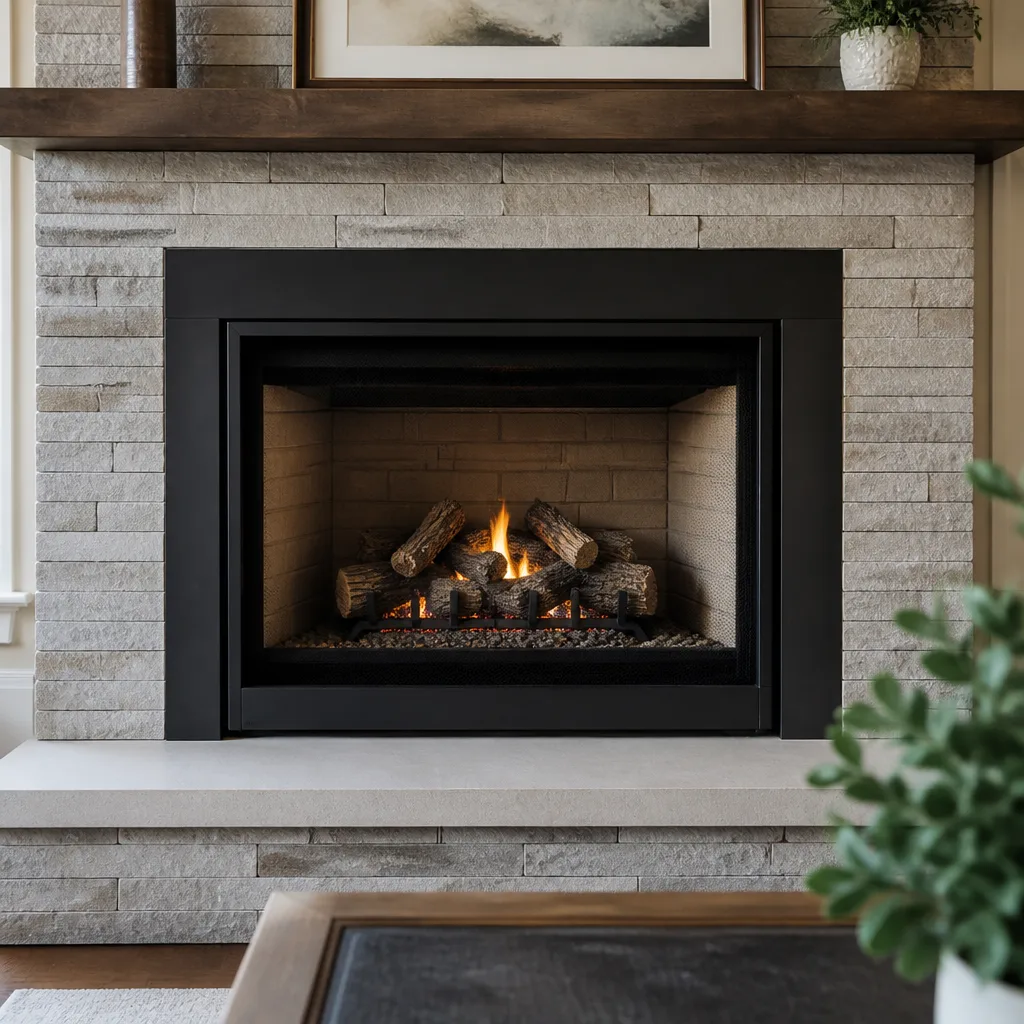 Gas fireplace service
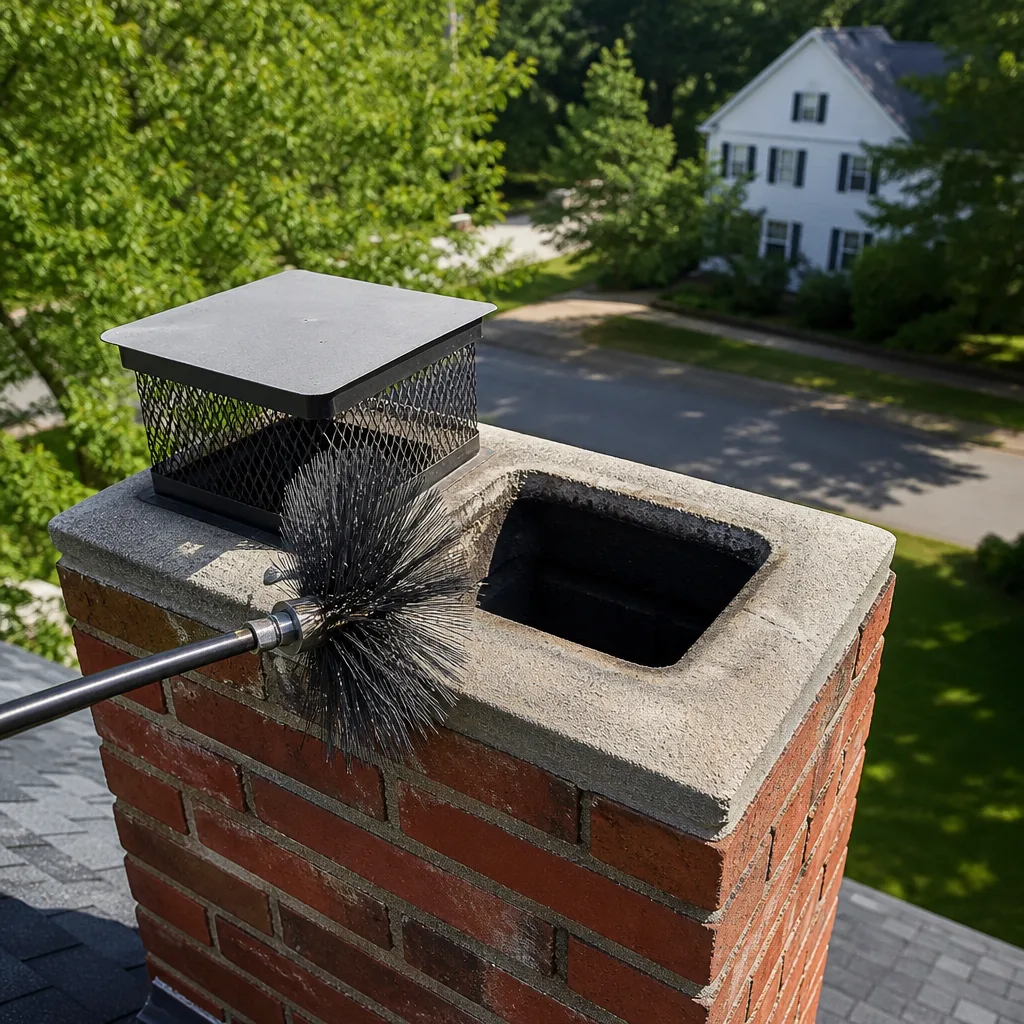
Level 1 sweep and inspection to the NFPA 211 annual standard - flue, crown, cap, and flashing checked and photographed
Chimney sweep logs do not sweep chimneys. They loosen some creosote - which then falls where a brush and vacuum still have to collect it.
Seasonal Chimney Cleaning Care for Arvada: Year-Round Homeowner’s Guide
Most chimney advice says the same thing to everyone: sweep it once a year and forget it. That advice treats January the same as July, and a north-facing exterior chimney the same as an interior one, which is not how a chimney actually ages. In Arvada, spring snowmelt is the season that exposes the worst masonry damage, not fall. The freeze-thaw cycles that run through winter have been prying at mortar joints for months, and water finds every gap as the ground thaws. The chimney that looked fine in October can show spalled brick and loose flashing by March. This guide maps the tasks and checks that matter by season, so you’re monitoring your system instead of discovering a problem mid-winter with a fire already burning.
Quick Answer
Chimney care in Arvada is a four-season job, not a once-a-year appointment. Sweep and inspect in early fall before the first fire, watch for freeze-thaw masonry damage in spring, use summer for any relining or repair work while mortar cures in warm dry weather, and monitor draft and burn quality through winter. A cap and crown check once a year keeps water out, which is the single largest cause of chimney damage in this climate.
Styles & brands we work with
- Sweep & inspection
- Caps & crowns
- Flue relining
- Masonry repair
- Gas fireplace service
Table of Contents
- Spring: What the Freeze-Thaw Season Leaves Behind
- Summer: The Best Time for Repairs and Relining
- Fall: Pre-Season Tasks Before the First Fire
- Winter: Monitoring Your Chimney During Burn Season
- How Burn Habits Change Your Cleaning Interval
- Caps and Crowns: The Year-Round Water Defense
- Common Mistakes to Avoid
- When to Call a Professional
Spring: What the Freeze-Thaw Season Leaves Behind
Spring in Arvada is a diagnostic season. The freeze-thaw cycle that has been cycling through your masonry all winter does its visible damage as temperatures swing from below freezing at night to mild afternoons. Water gets into a mortar joint or a hairline crack, freezes, expands, and pushes. When it thaws, the joint stays slightly wider than before. Repeat that a few dozen times and you get the conditions that show up every spring. This is the season to look at the chimney as a structure, not just a flue.
Outside, on a masonry chimney, here’s what’s worth checking after the melt:
- Spalling brick. Look for faces that have popped, flaked or crumbled. A brick with a hollow sound or a visibly missing face has likely absorbed water and broken under frost pressure. Spalling brick is a structural warning, not cosmetic.
- Mortar joint erosion. The joints should sit slightly recessed but intact. If you can rake the mortar with a screwdriver and it crumbles, it’s washing away and the brick above is unsupported.
- Flashing separation. Where the chimney meets the roof, the metal flashing should be tight and sealed. Tar or caulk lifting away, or a visible gap, is a direct path for water into the attic and the chimney structure.
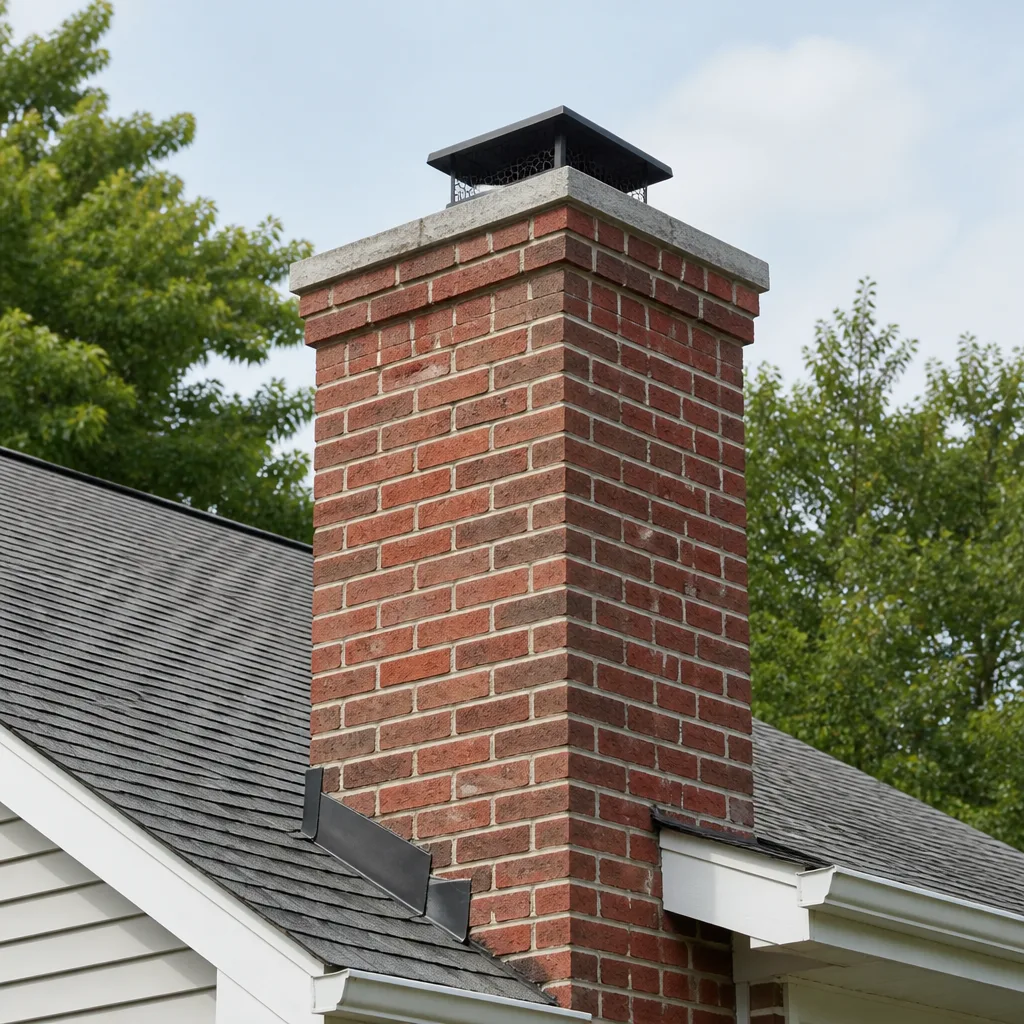
- Crown cracks. The crown is the concrete cap at the top of the chimney. Any crack wider than a hairline lets water in, and water in the crown is water sitting on top of everything behind it.
- Efflorescence. A white powdery stain on brick is a sign that water has been moving through the masonry and evaporating through the surface. It points to where moisture is entering.
Two of those findings, spalling and eroded mortar, are the usual reasons we recommend a Level II inspection in spring. That inspection goes beyond a visual look at the firebox and flue. It’s warranted any time the exterior shows real deterioration, because what you see outside is often the smaller half of the problem. Calling in chimney repair help early is cheaper than waiting for the structure to compromise further.
Summer: The Best Time for Repairs and Relining
If spring tells you what’s wrong, summer is when to fix it. In Arvada, summer does two specific things in your favor: it makes repair work easier to schedule, and it gives mortar the warm, dry conditions it needs to cure properly. Repair work scheduled in June, July or August is done on a comfortable schedule, not squeezed into the weeks before the first hard freeze. Mortar cured in dry summer air reaches full strength before cold weather arrives, so it doesn’t have to survive a freeze cycle while it’s still setting. Repointing a chimney in late October is a different, more difficult job.
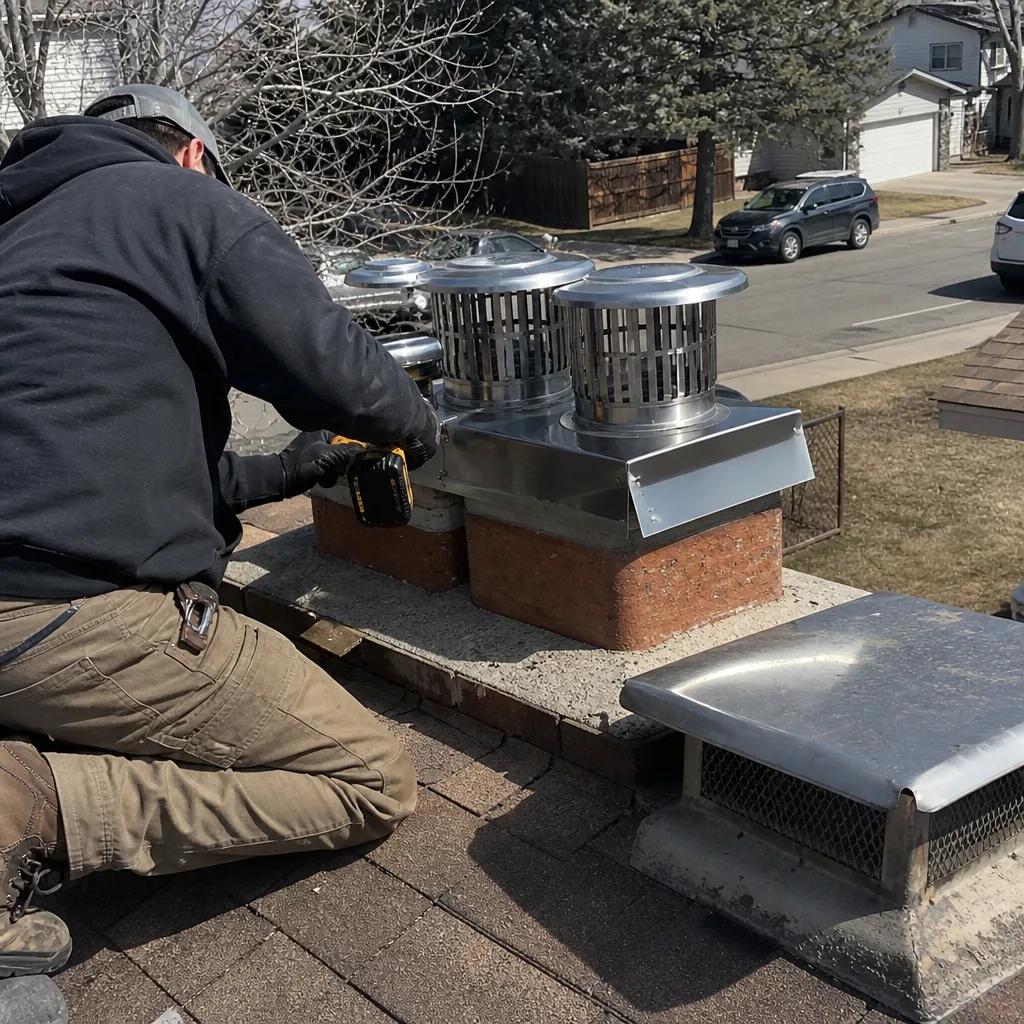
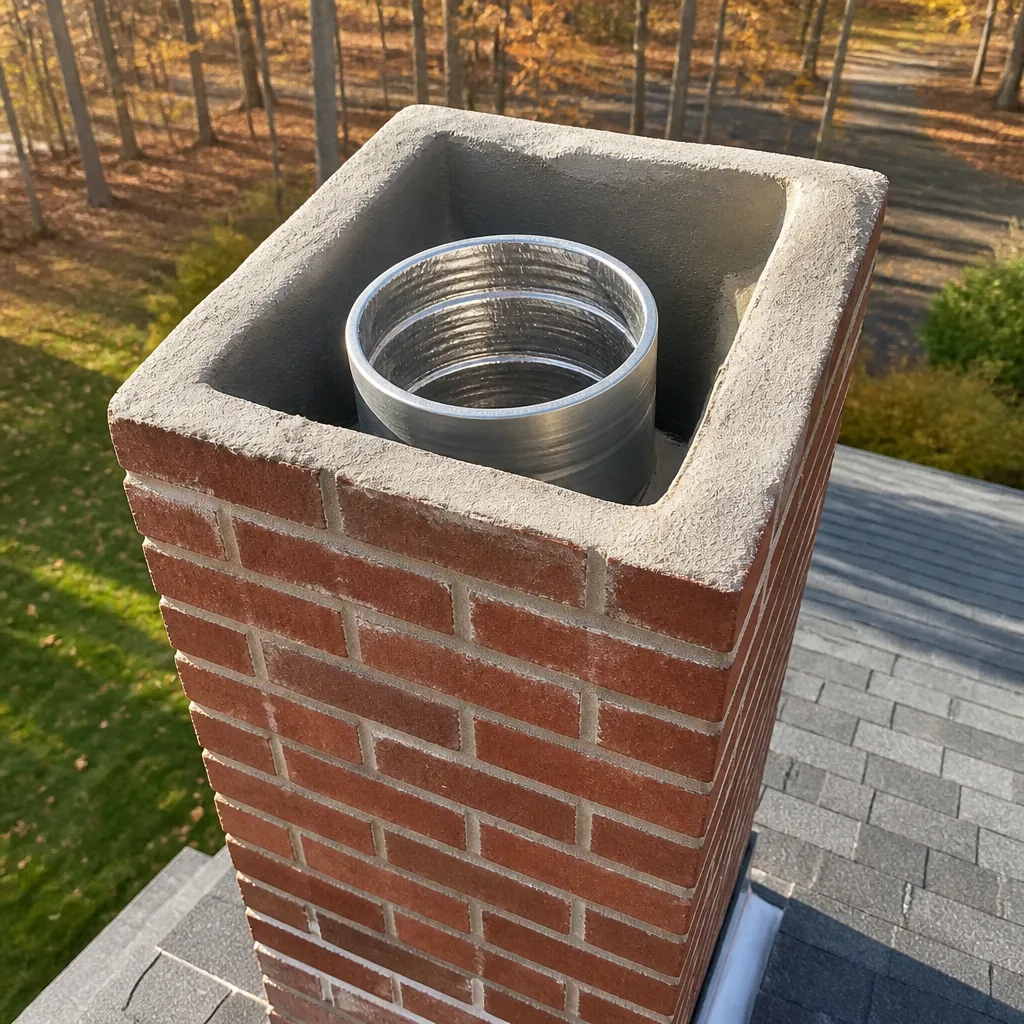
Summer is also the season to look at the liner. Relining a chimney is a full job and not one to rush. When we reline, we install a DuraFlex flexible liner system, a professional-grade product sized to the existing flue and the appliance it serves. Before any of that is installed, the flue gets cleaned and inspected. If the existing flue has cracked or spalled clay tiles, we can resurface with HeatShield, a chimney resurfacing product applied by trained technicians. That’s a repair many sweep-only companies can’t offer, because it takes both the product and the training to apply it correctly. A resurfaced liner is a valid option where a full reline isn’t necessary.
Here’s a summer repair checklist worth working through before fall:
- Schedule the inspection first. Don’t book repair work on a guess. Get the flue inspected and the findings in hand.
- Address the liner before the firebox. The liner is the safety-critical component. If the flue has interior cracks, that comes first.
- Repoint damaged joints now. Warm, dry weather sets the repair for the long haul.
- Fix the flashing. A flashing repair in summer keeps the fall rains out.
- Repair the crown. A cracked crown is the number one entry point for water. It’s cheaper to fix in summer than to replace a damaged structure in fall.
Summer is also a reasonable time to think about fireplace repair on the firebox itself. Damper issues, cracked firebrick and grate problems are all things to sort out while there’s no fire in the box. If you’re going to need access to the flue and the firebox, do it in the same season.
Fall: Pre-Season Tasks Before the First Fire
Fall is the season everyone thinks about, and it is important. But the Arvada quirk worth knowing is this: September beats November for scheduling a sweep. By November, most homeowners have waited until they feel the first cold snap, and the schedule packs tight. In September, you can get the chimney cleaned and inspected without the pressure, and if anything needs repair, there’s still time to get it done before you need the fire on. The chimney that gets swept in September has room to be repaired if the sweep uncovers a problem. The one swept in November often has to wait.
Fall tasks fall into two groups. First, the annual sweep and inspection. If it’s been more than a year, or if you burn a lot of wood in winter, that’s your cue. We do the chimney sweep and inspection together, so you get the flue cleaned and checked at the same time. Second, the pre-season checks you can do before the sweep:
- Test the damper. Open and close it fully. It should travel freely and seal at the top. If it’s stiff, drops open, or won’t stay closed, note it for the technician.
- Look up the flue from the firebox. You’re not evaluating the whole flue, just spotting obvious problems. If you see cracked or missing clay tiles, that’s a call.
- Do a smoke test. Light a rolled sheet of paper in the firebox and watch how the smoke drafts. A quick, strong draw is good. Smoke that rolls out into the room points to a draft problem.
- Clear the firebox. Remove leftover ash and any debris from last season. If you find a buildup of creosote, don’t burn until it’s cleaned.
- Have the sweep and inspection done. This is the step that catches the things you can’t see from the firebox.
Fall is also a good time to put the cap back in order. If hail took out part of the cap over the summer, fix it before the rain and snow arrive. If the cap went missing in a storm, that’s a priority repair, not something to table.
Winter: Monitoring Your Chimney During Burn Season
Once the fire is on, your job shifts from maintenance to observation. You’re not tearing anything apart in winter. You’re watching for signs that the chimney is working the way it should. Most chimney problems announce themselves in winter through two categories of symptoms: signs of incomplete combustion, and signs of draft failure. Knowing the difference matters, because the response is different.
Incomplete combustion means the fire isn’t burning cleanly. It shows up as a smoldering rhythm, thick smoke from the chimney, a fire that struggles to stay lit, and more creosote deposit. Cool, slow fires deposit more creosote than hot, clean ones. A smoky chimney with no visible flame is a sign the fire is struggling. Wet wood, undersized fuel and an uninsulated flue all push you toward incomplete combustion.
Draft problems mean the smoke and gases aren’t leaving the chimney. It shows up as smoke rolling back into the room when you open the glass doors, a fire that smokes continuously, a damper that won’t stay open, a flue that draws poorly on cold starts. A cold exterior chimney on a north wall of an Arvada house often struggles on first light as the flue has to warm up to draw. A short warm-up with paper and a small starter fire usually resolves the cold-start draw. A persistent draft problem does not resolve itself and points to a flue restriction, a blocked flue, or a pressure problem in the house.
If you smell smoke in the house during a fire, here’s the order of tasks:
- Open the damper fully if it isn’t already. Confirm it’s not stuck partway.
- Crack a window near the stove or fireplace to give the draft air to pull from.
- Check the fire for wet or oversized wood. Don’t add fuel if the fire is already struggling.
- Stop the fire if smoke continues and you can’t identify a cause. Let it burn down and out. Then have the chimney inspected before burning again.
Smoke in the house is not something to live with or manage around. When the fire lights easily, draws well, and burns clean, the chimney is doing its job. When it doesn’t, something is blocking the path or the fire is being starved of draft.
How Burn Habits Change Your Cleaning Interval
The “sweep once a year” rule assumes an average fire. Most Arvada homeowners are not average, and their burn habits change how much cleaning their chimney needs between annual sweeps. There’s no single schedule that fits every fireplace. The function is straightforward: how much creosote gets deposited depends on how the fire burns, and how the fire burns depends on wood moisture, wood type, and fire temperature.
Wood moisture content is the biggest variable. Seasoned firewood, split and dried for a full season, burns hot and produces less creosote. Wet, green wood spends its heat driving off moisture, so the fire runs cooler, the smoke is thicker and creosote deposits faster. Splitting a log and checking the cut end for moisture is the test to run before you burn it. A properly seasoned piece feels lighter than it looks and shows visible checks on the end grain. A green piece looks and feels wet at the cut.
Wood type matters less than moisture, but it does affect burn. Dense hardwoods burn hotter and longer, which drives a cleaner fire. Softwoods burn hot but fast, and can deposit more if they’re burned wet. The bigger factor is a steady, hot fire. A slow smoldering fire in a closed firebox deposits more creosote than a hot fire that burns down to a bed of coals. You’re not opening the doors and letting heat out; you’re giving the fire enough air to burn the fuel completely.
Fire temperature is the outcome of the other two. Hot, clean fires leave less behind. Cool, smoky fires leave more behind. A homeowner who burns well-seasoned wood, loads a fire that burns hot, and keeps the damper open until the fire dies down needs less frequent cleaning than one who burns wet wood in a closed-down stove. If your fire is smoldering for most of the burn, your chimney will need a sweep sooner than the calendar suggests. If you run hot, efficient fires, you may go longer, but a year is still the interval to get it checked. Our technicians have up to 12 years of experience with these variables across Arvada.
There’s one important caveat. The “sweep once a year” rule is a floor for inspection, not a ceiling for cleaning. If you burn a lot and your fire runs cool, you can hit the cleaning threshold inside a season. If the fire burns clean and hot, you may be fine at a year. The only reliable test is the sweep and inspection.
Caps and Crowns: The Year-Round Water Defense
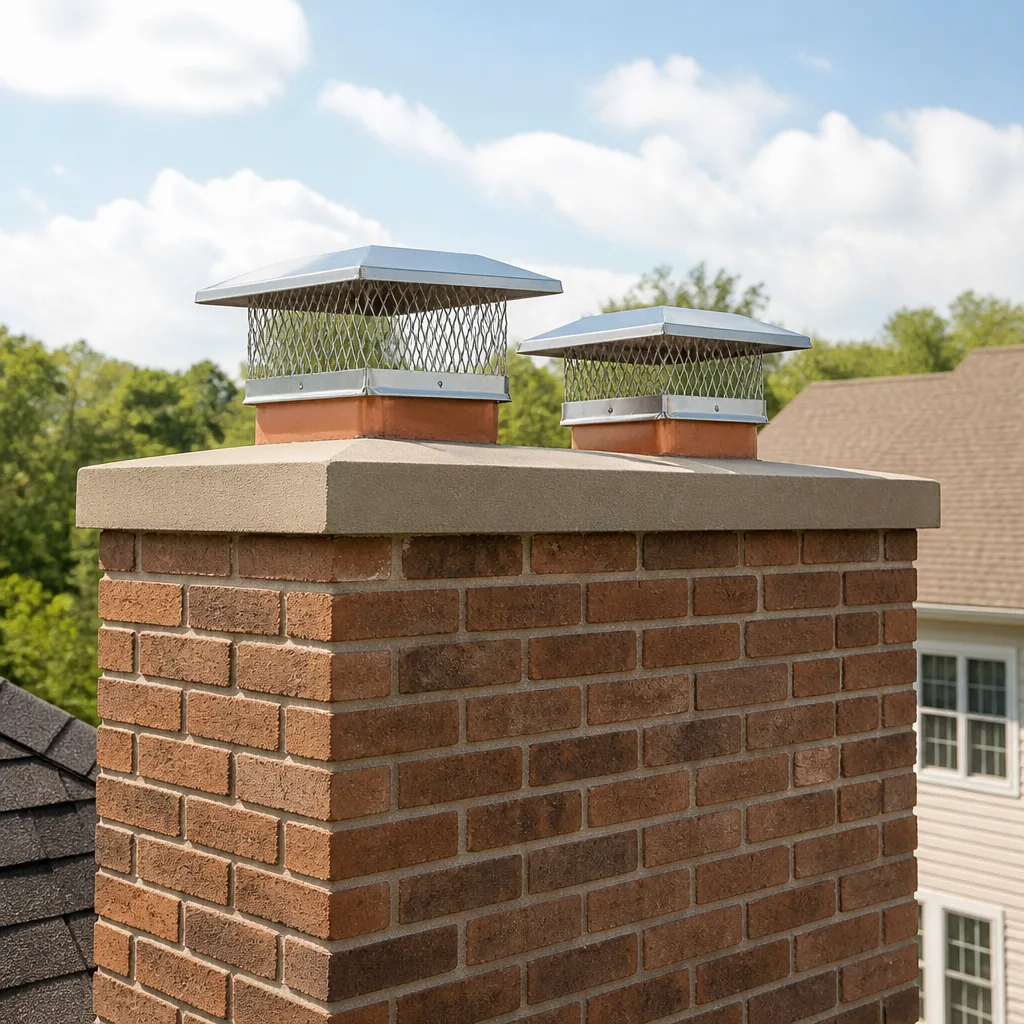
Of all the chimney damage we see in this area, water intrusion is the biggest cause. That’s why the cap and the crown belong in a year-round care guide, not just in the repair section. A chimney cap protects the flue opening at the top. A crown protects the top of the masonry. Both shield the structure from rain and snow, and when either fails, water gets into the chimney and starts the slow damage that shows up as spalling, eroded mortar and a crumbling crown. A cap or crown repair today prevents a much larger structural repair later, and that’s true every season of the year.
The cap takes the most weather abuse over a year. Hail season can crack, dent or dislodge a cap, and wind can take a cap off entirely. That’s especially true after a heavy hail year in Arvada, which is why a post-storm cap check is worth doing once the weather clears. If you’re looking at a cap and it’s leaning, missing screws, or visibly damaged, fix it before the next rain or snow. We stock and install Gelco caps, which are professional-grade chimney caps, not the generic hardware store item. A cap that’s sized and installed correctly for the flue protects the way it should.
The crown is the other half. Any crack in the crown lets water in, and water in the crown runs down inside the chimney. Look at the crown from the ground if you can, or have it checked during the annual inspection. A crown with cracks, or one that’s spalling and crumbling, needs repair before the next freeze. This is where the year-round logic pays off: a crown checked in spring and repaired in summer is protected before fall rains and winter freeze-thaw. A crown left until it fails takes much of the structure with it. One company can handle the sweep, the inspection, the cap and crown, the fireplace, and the structural repair, so you’re not handing the job between contractors. We handle the full chimney system, from the firebox to the crown.
Common Mistakes to Avoid
Most of the chimney failures we see in Arvada were avoidable. A few habits and overlooked details drive the majority of them:
- Treating the sweep as cosmetic. A chimney sweep is not about cosmetics. It’s the inspection and cleaning that catches a cracked flue, a failing crown or heavy creosote before it becomes a fire risk. Booking a sweep for appearance alone misses its real purpose.
- Waiting until November to schedule. Scheduling the annual sweep for November puts you in the busiest window and leaves no time to address repairs. In this climate, September is the better month to get the inspection and cleaning done.
- Burning wet or green wood. Wet wood runs a cool fire and deposits creosote faster. Splitting a piece and checking the cut end before you burn it is the single best habit for reducing buildup between sweeps.
- Ignoring winter draft changes. A fire that draws poorly on a cold start can be resolved with a warm-up, but a fire that smokes consistently points to a real problem. Managing smoke in the house for a whole season is a mistake, and it’s the one to catch early.
- Assuming the cap is fine. Hail knocks caps loose and cracks crowns. A cap that’s damaged or missing lets water straight into the flue, and crowns that aren’t checked at the annual inspection fail silently. Look at both once a year.
- Deferring spring masonry findings. Spalling brick and crumbled mortar seen in spring are not cosmetic issues. Left through the next winter, they get worse. Getting a Level II inspection when the exterior shows real deterioration is the response, not a wait-and-see approach.
- Letting a smoldering fire run all evening. A slow, smoky fire burns cool and deposits creosote quickly. Burning a hotter fire and letting it burn down to coals is cleaner than choking down the air and letting the fire smolder.
When to Call a Professional
There are a few situations in a seasonal care routine where the right move is to call rather than check it yourself. Any visible cracked or missing clay tiles in the flue, spalled brick or eroded mortar joints, a cracked or crumbling crown, or flashing that has pulled away from the roof are all signs to call for an inspection. Smoke rolling into the house during a fire, a persistent draft problem, or a fire that struggles to stay lit also warrant a professional look. If you don’t know when your chimney was last inspected, that’s a call. The work that matters here isn’t something to be done by hand from the ground. It’s done with the right tools by someone who reads what they see.
Arvada Chimney Sweep Co offers free estimates in Arvada – call (888) 378-1823. The estimate sets the price per job in writing, and nothing is recommended without evidence you can see for yourself.
See the difference
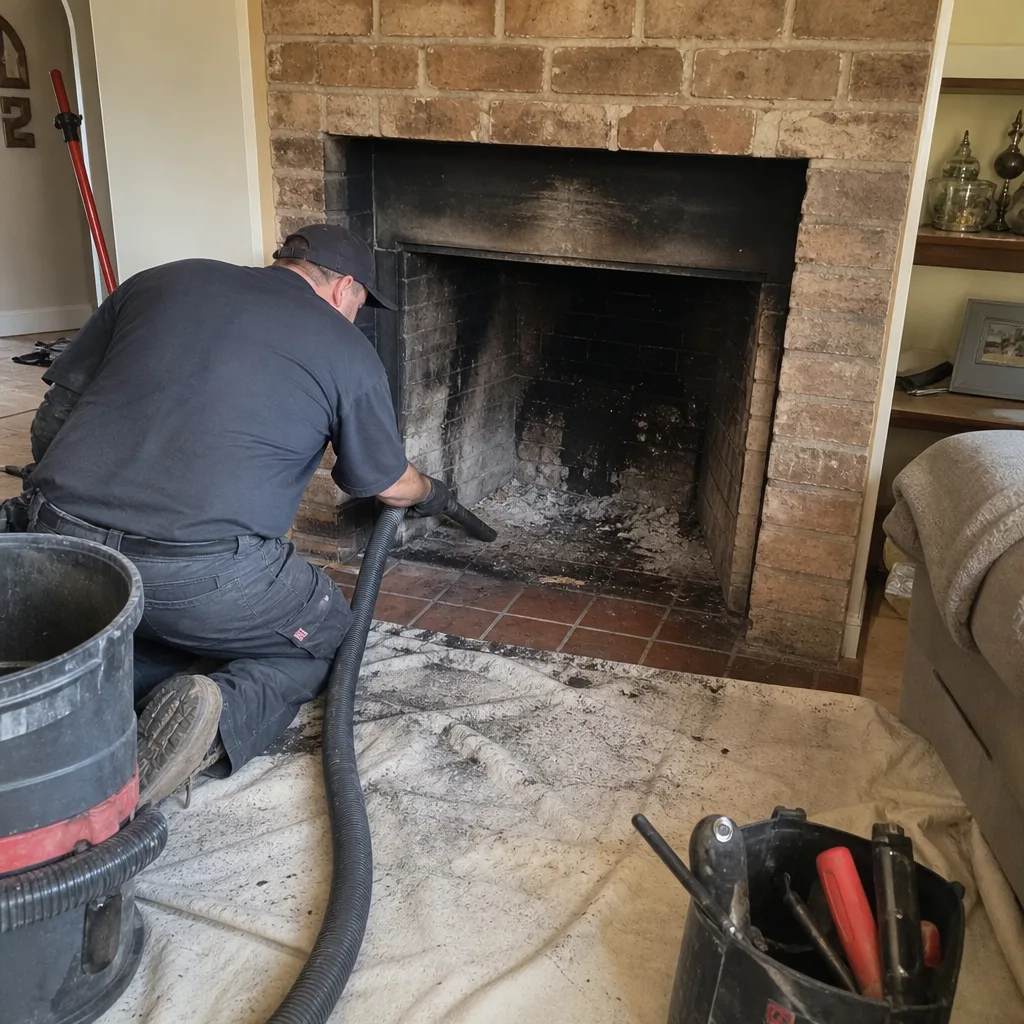 Before
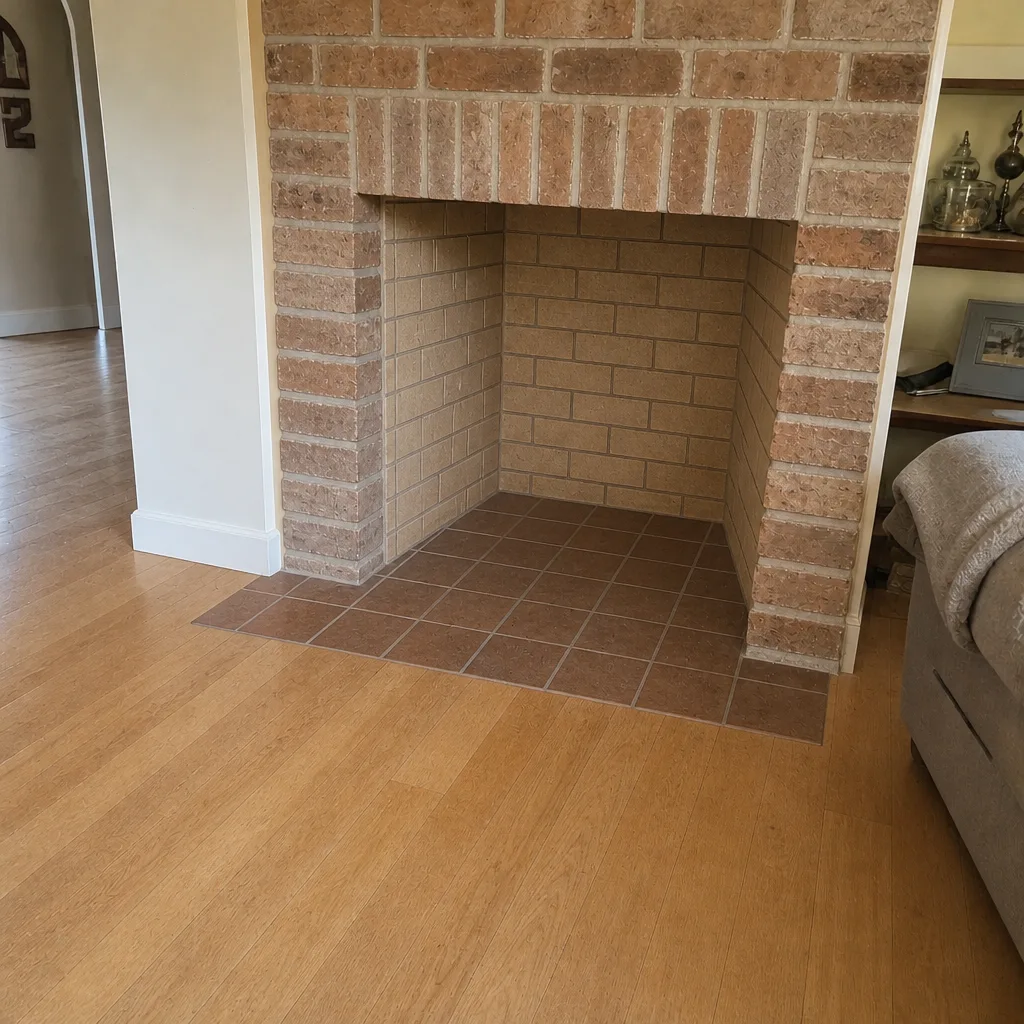 After
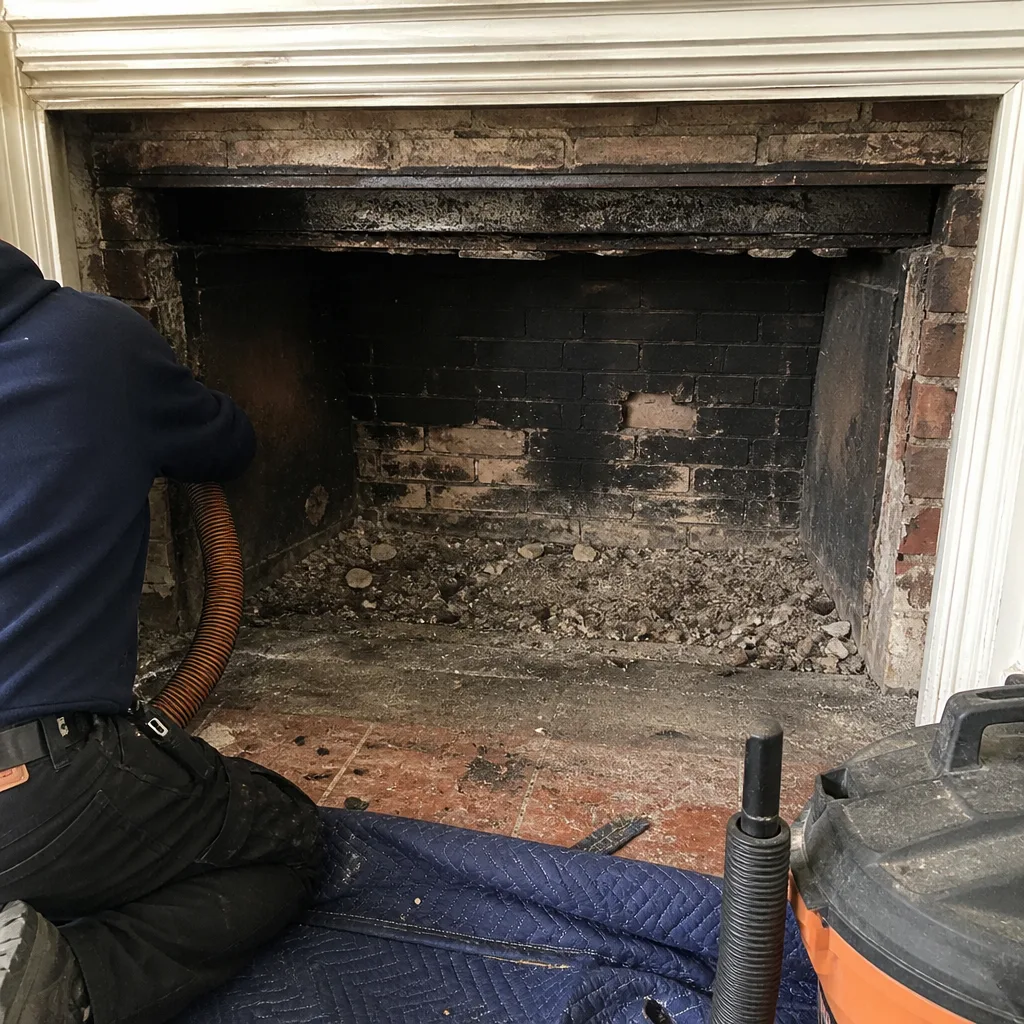 Before
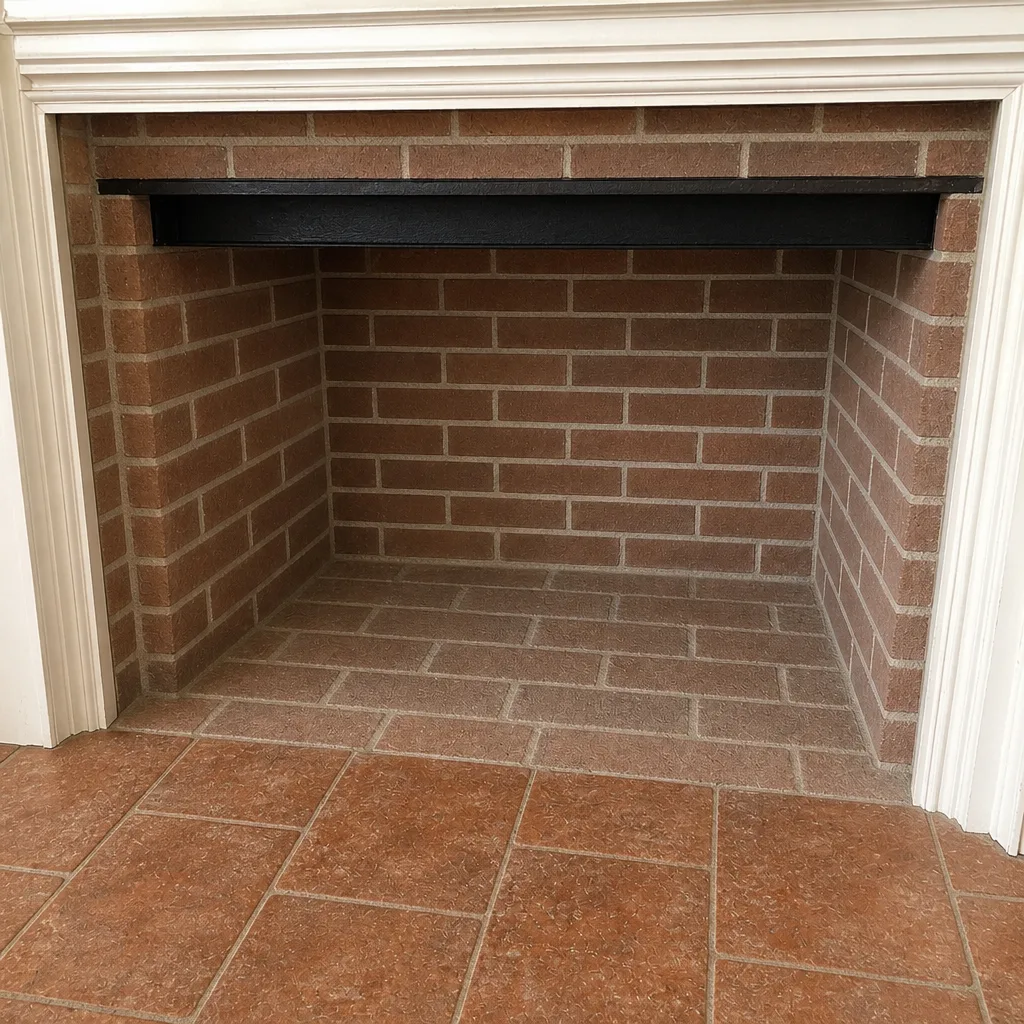 After
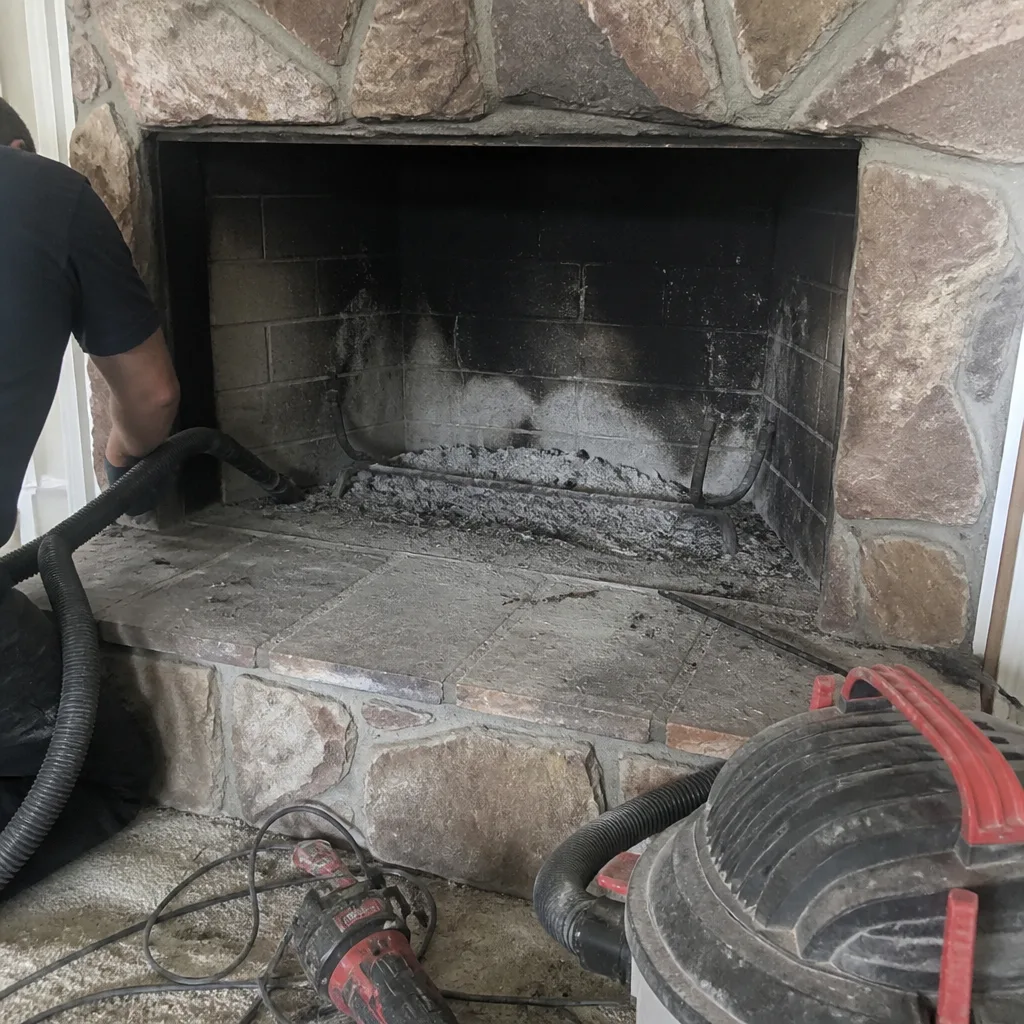 Before
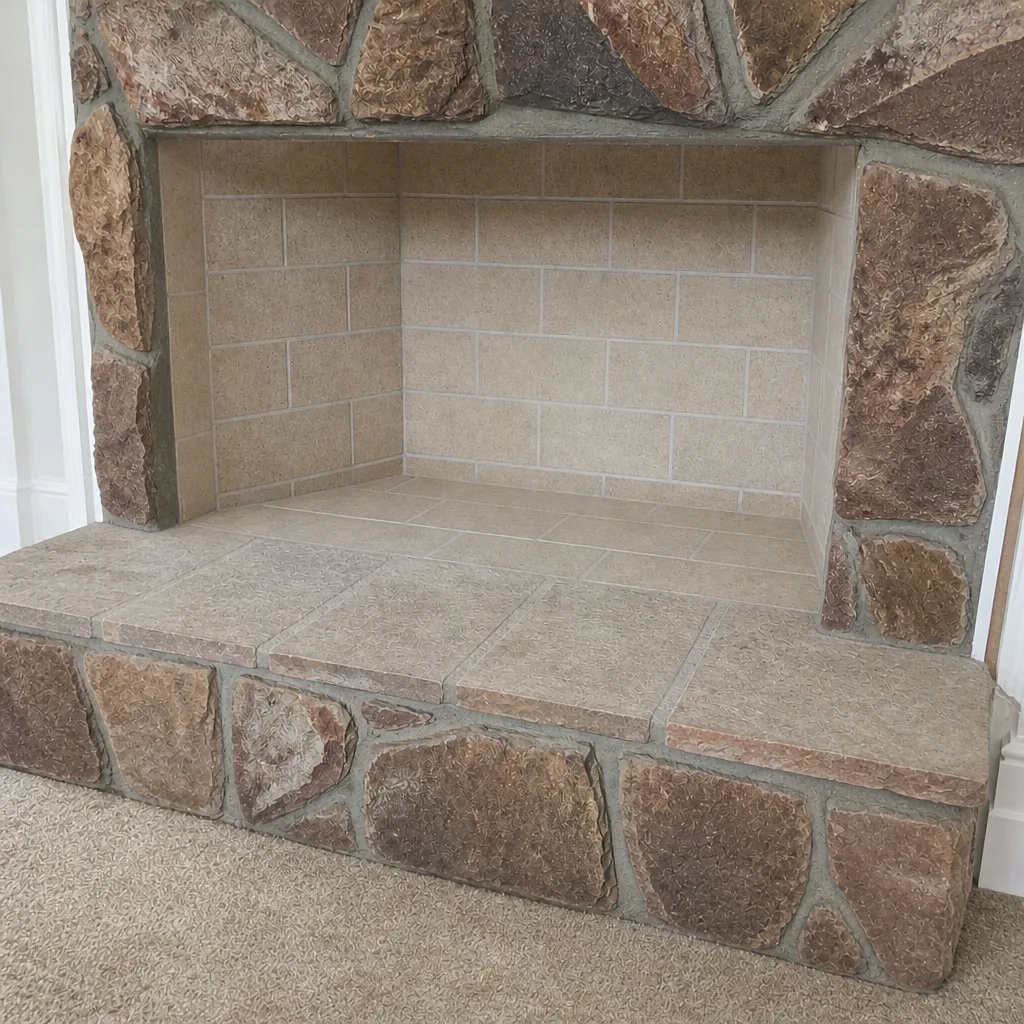 After
Frequently Asked Questions
At least once a year if you burn wood, and more often if you burn wet wood or run a lot of cool fires. The annual sweep and inspection is the baseline, but the cleaning interval depends on your burn habits. A hot, well-seasoned fire needs less frequent cleaning than a smoldering one. Call (888) 378-1823 for an exact quote – estimates are free.
Look for spalling brick, mortar joints you can crumble with a screwdriver, flashing that has separated from the roof, and cracks in the crown. Those four show up after the freeze-thaw cycle has been working on the masonry all winter. If any of them is present, the exterior has real deterioration and a Level II inspection is the right step. Call (888) 378-1823 for an exact quote – estimates are free.
Yes. Repair work is easier to schedule, and mortar cures under warm, dry summer conditions, which sets the repair for the long haul. Summer is also the right window for relining with a DuraFlex liner or resurfacing with HeatShield. Doing that work in fall, close to the first freeze, means the repair has to survive a freeze cycle while it’s still setting. Call (888) 378-1823 for an exact quote – estimates are free.
A cold chimney struggles to draw until the flue warms up, which is common on first light, especially on an exterior chimney. A quick warm-up with paper and a small starter fire usually resolves it. If the smoke continues after the flue should be warm, that’s a draft problem, not a cold start, and it points to a restriction or a blocked flue. Call (888) 378-1823 for an exact quote – estimates are free.
Moisture matters most. Seasoned wood burns hot and deposits less creosote; green or wet wood runs cool and deposits more. Wood type matters a little, but the biggest variable is whether the wood is dry. Splitting a piece and checking the cut end before you burn is the test worth doing. Call (888) 378-1823 for an exact quote – estimates are free.
Creosote builds up in the flue, the fire burns less cleanly, and the flue eventually can’t draw properly. A cracked flue or a clogged flue stops the system from venting, and a heavy creosote load is a fire risk. You don’t see most of that from the firebox. Skipping a year once isn’t a disaster, but skipping several removes the check that catches problems before the fire does. Call (888) 378-1823 for an exact quote – estimates are free.
The Bottom Line
Chimney care in Arvada is a four-season routine. Spring is for looking at what freeze-thaw did to the masonry. Summer is for repair and relining while the weather cooperates. Fall is for the sweep and inspection, ideally in September rather than November. Winter is for watching draft and burn quality, and calling when something isn’t right. Burn habits determine how much cleaning you need between sweeps, and a cap and crown in good condition keep water out all year. Arvada Chimney Sweep Co handles the full chimney system, from the firebox to the crown, with professional-grade products including DuraFlex, HeatShield, Gelco, Olympia Chimney, Famco and Copperfield. One company for sweep, inspection, liner repair and masonry means no juggling contractors mid-job.
For a free estimate, call (888) 378-1823. We answer 24/7. Fast dispatch from 7am to 7pm, Sunday through Friday. Closed Saturday. Our technicians have up to 12 years of experience, and we’ll show you what we find before we recommend anything. If the problem can safely wait, we’ll say so.
Written by the team at Arvada Chimney Sweep Co.